
Chances are, if you were to ask any random person on the sidewalk what their gut reaction is to hearing words like ‘bacteria’, or ‘virus’, or ‘fungus’, their response wouldn’t be too favorable. In fact, it’s highly likely – unless you happen to stumble across the random microbiologist- that the person’s answer to such a question would be something along the lines of “bad” or “gross”.
Microbes, in general, have a bad reputation in today’s society despite the fact that less than one percent of them result in any form of disease. Supermarkets have aisles full of various disinfectant sprays and hand sanitizers promising to kill 99.9% of all germs. Molds are instantly associated with spoiled and rotting foods that must be thrown away or with sections of buildings that must be cleaned or quarantined off in order to remove harmful spores. As far as viruses are concerned, it’s not likely that anyone will forget the infamous SARS COV-2 coronavirus responsible for the COVID-19 pandemic that swept through the world six years ago anytime in the near future.
With all the negativity that surrounds microbes in our society, it’s easy at times to forget how important they really are for both our and the ecosystem’s survival, and just how much we truly rely upon them to sustain what we consider normal life.
So, let’s take a deeper dive into just a handful of the ways we interact with microbes on a daily basis that result in our benefit rather than our harm.
Microbes in Healthcare and Wellness
As unnerving as it may sound, humans are a veritable petri dish of microbes both internally and externally. Human skin acts not only as a cover for the muscles, organs, and tendons that lie beneath its surface, but also as a first line of defense against infectious diseases. On this surface dwell various species of bacteria, viruses, and fungi that interact, for the most part, in commensal or mutualistic relationships with one another and with their human hosts. The concentration and species makeup of these microbial communities is dependent upon the nature of the specific location of the body, as well as the age, gender, host genetics, diet, and overall lifestyle of the individual.
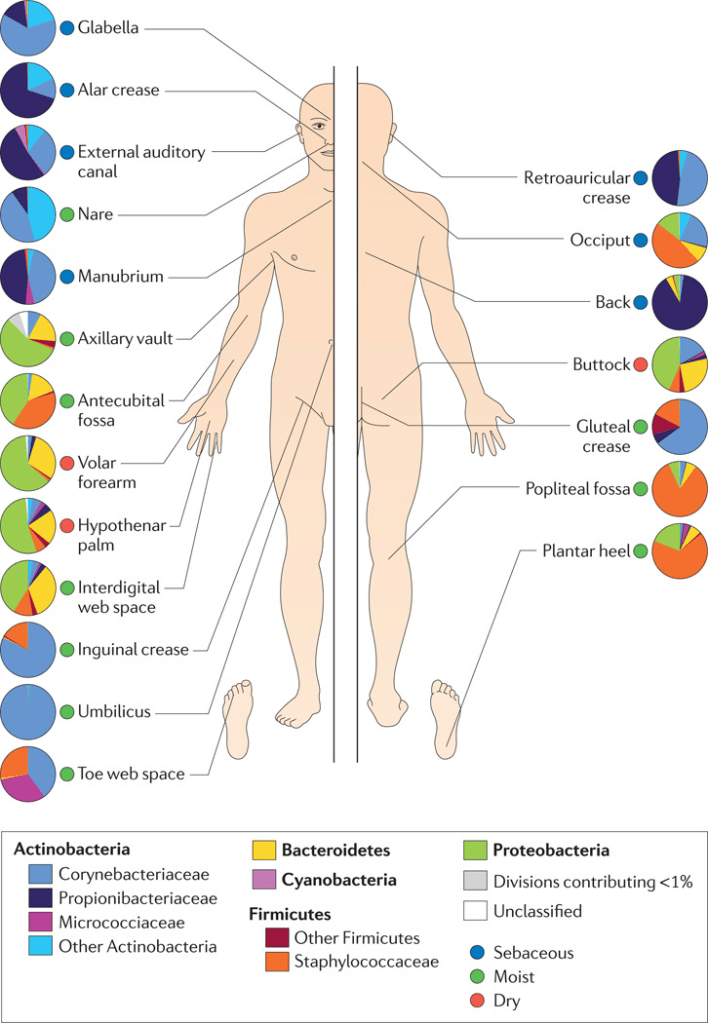
These skin microbes contribute a great deal to the well-being of their host, such as colonizing the skin surface to prevent more pathogenic microbes from gaining entrance to the interior of the body, education and activation of the innate immune system, maintaining skin hydration, and wound repair. The microbial flora of the nasopharyngeal tract, and the eyes function in much the same capacity, and gastrointestinal microbiota play key roles in digestion, vitamin production, nutrient intake, as well as those played by microbes in other areas of the normal flora.
Microbe have also been and continue to be essential in healthcare. Fecal microbial transplants have been used to rectify dysbiosis and other dysregulations of the gastrointestinal microbiome that result from inflammatory bowel conditions such as Crohn’s Disease and ulcerative colitis. Actinobacteria and filamentous fungi found in soil and marine environments are regularly used in the production of antibiotics. Algae such as Spirulina are not only excellent dietary supplements for vitamins and proteins, but they also have the potential to be used for anti-inflammatory, anti-viral, anti-allergenic, and anti-cancerous purposes. Other algae species, such as Porphyra haitanensis and Arthronema africanum have been shown to inhibit the proliferation of several forms of cancerous cells. Retroviruses, adenoviruses, adeno-associated viruses, and herpes-simplex viruses have been modified and utilized to act as delivery vectors for therapies to treat inherited genetic conditions like Leber congenital amaurosis, several types of blood cancers, sickle cell disease, and will likely prove useful in the future for treatment of cystic fibrosis, inherited blood disorders such as hemophilia and thalassemia, and may prove useful in suppressing cancerous growth. All of these are simply a handful of the various ways we have found ways to utilize microbes for our medicinal benefit.
Microbes in Agriculture and Environmental Regulation
Microbes are also essential in modern agricultural practices. While nitrogen is an important component for plant photosynthesis and protein formation, it is generally one of the most limiting nutrients that affects plant development despite its relative abundance in the atmosphere. Limitations in nitrogen accessibility arise due to the crop’s inability to convert the various sources of nitrogen that are provided from the environment to the reduced sources that are necessary for the photosynthetic process. While some crops, such as cereals, are unable to generate these specific sources of nitrogen themselves and thus require fertilizing treatments that include ammonia, legume plants, as well as some other crops that have developed symbiotic relationships with rhizobia bacteria that interact with the plant roots are able to produce ammonia for photosynthesis through a process known as nitrogen fixation. Mutualistic relationships between crops and rhizobacteria also allow for increased acquisition of phosphorus, another compound that is necessary for the majority of the metabolic processes performed by plants. Various bacterial species, molds and yeast present in soils assist in decomposition and nutrient recycling to provide the various organic compounds plants require to sustain life, and mycorrhizae fungi cooperate with plant roots to increase overall nutrient uptake and water absorption. Innovative methodologies of introducing microbes to various crops to increase output have been of great interest to researchers, given the benefits that microbes already provide naturally to plants. Biofertilizers that contain various bacteria, fungi, and blue-green algae have been shown to increase soil fertility, improve the overall chemical, physical, and biological properties of the soil, and ensure proper nutrient availability for crops. The use of biofertilizers instead of traditional, chemical-based fertilizers is not only beneficial for the overall health of the soil, but also avoids the plant-root damage that can result from the regular application of chemical fertilizers. Plant growth promoting microbes (PGPMs) are synthetic microbial communities that are introduced to crops to provide plant resilience against abiotic stress factors such as drought and increasing temperatures. PGPM’s are of increasing interest to scientists due to the solutions they may provide to the challenges of the global effects of climate change and the expected increase of the global population, which will increase the overall demand for food.
Outside of agriculture, microbes are responsible for a variety of functions in a number of different ecosystems such as providing nutrition to other organisms, regulating the atmosphere, supporting local niches by providing structure and mitigating and removing the effects of pollutants. In marine ecosystems, microbes act not only as the base of the food web for most other lifeforms, they also form symbiotic relationships with corals, sponges and mollusks as well as form complex structures to provide various habitats. In terrestrial biomes, various mesophilic and thermophilic bacteria and fungi act as the primary decomposers of dead organic matter and recycle the various components back into the nutrient cycle of the environment. While this breakdown does contribute to the overall carbon budget and affects the level of greenhouse gasses that invariably affect global temperatures, microbes also greatly contribute to the removal of carbon dioxide from the atmosphere as well. Microalgae like diatoms and cyanobacteria that reside in marine environments assist plant life in carbon dioxide capture and oxygen output through photosynthesis. Scientists estimate that approximately half of the oxygen in the Earth’s atmosphere comes not from terrestrial plant life, but from the microbial plankton, algae, and bacteria that can be found in the oceans. Scrubbing carbon dioxide and other greenhouse gasses isn’t the only way that microbes contribute to removing pollution from the environment. Various species of fungi, algae, microalgae and bacteria have proven effective in degrading and removing crude oil, diesel, wastewater, heavy metals, plastics, and microplastics from the soil, landfills, and water sources.

Microbes in Industry
Thanks to the advent of molecular research, we are able to utilize factors produced by microbes for industrial purposes on top of reaping all of the other benefits provided by these microorganisms. Bacteria, yeasts, and molds can be used for fermentation to produce wines, breads, beers, cheeses, yogurts, and any number of foods. Enzymes produced by microorganisms have been used to greatly increase the efficiency of producing a variety of goods such as pulp, paper, leather, biofuels, and detergents. By-products from the fermentation processes of yeasts like Saccharomyces cerevisiae and Clostridium bacteria are used in the production of biofuels like ethanol that allow for alternative energy sources from fossil fuels. The Taq polymerase from the thermophilic bacterium Thermus aquaticus revolutionized molecular and medical research, as well as diagnostic and pharmaceutical capabilities, once it was incorporated in DNA amplification with PCR. Factors from other extremophiles have been of interest to researchers for future applications in a number of different industries due to their ability to withstand conditions that would otherwise destroy other enzymatic catalysts from other microbes.
A Much Needed Change in Perspective
Microbes, love them or hate them, are an integral part of our lives. Without the commensal and mutualistic relationships that we already share with microbes, life as we know it – and life in general – would cease to function. Yet still there persists a continued lack of adequate communication surrounding the importance of human-microbial interactions, and the misconceptions and misinformation surrounding the majority of these microorganisms perpetuates a level of distrust and negativity seen in society that is unfounded, unnecessary, and even dangerous. The current view that we as a society in general have concerning microbes – in that they are, as a whole, unhygienic and unsafe – must be altered to a perspective that is more favorable and more accurate if we ever hope to benefit to the fullest extent from the relationships we already share with our microscopic counterparts. Certainly, we already receive a number of advantages from our microbial relations, both from the body’s natural microbiome and the natural functioning of the microsphere of the ecosystem. But why stop there? Rather than viewing our relationship as an ‘us-versus-them’ situation, or seeing all microbes as organisms to be feared, what advances could we gain in science, medicine, technology, agriculture, and any number of other fields if we as a society made an intentional effort to start working with the microbes that are already working with us rather than against them? Only by shifting our perspective from the negative to the positive will we ever be able to answer this, and only then will we then begin to fully realize the true potential of the intrinsic nature we share with the microbial world that surrounds us.
 All the Small Things
Leave a comment